Discovery inventory
MOTS-c peptide research, from AMPK to CK2
The experimental record gets more interesting when each entry retains its date, tissue and test. Here are the discoveries I think deserve the shelf space.
2015: glucose handling in muscle
The founding MOTS-c peptide paper connects an unusual genetic origin with a measurable metabolic effect. In mice and cultured cells, MOTS-c inhibited the folate cycle and the making of purines, chemical building blocks used in DNA. A substance called AICAR accumulated, activating AMPK and changing how muscle handled glucose.
Mice eating a high-fat diet gained less weight and maintained a better response to insulin. Muscle supplied the strongest tissue signal. That tissue specificity carries weight with me: it tells the next experiment where to look, and it makes a broad metabolic claim answerable to something measurable.
The finding remains preclinical. It establishes a line of investigation in mice and cells; a clinical benefit from administering MOTS-c to people remains untested in these sources.
2018: the nucleus under stress
The next discovery concerns movement. I regard that movement as the collection’s most surprising result. In human and mouse cells grown in culture, metabolic stress prompted MOTS-c to enter the nucleus, the compartment holding nuclear DNA, and help regulate stress-response genes. The response involved AMPK and NRF2, which participates in antioxidant defences.
Glucose restriction and chemical stress were experimental conditions in dishes. They make this a study of how cells respond to a challenge. My favourite part is the change of address: a signal encoded in mitochondrial DNA participates in regulating nuclear genes. The cell has more conversation going on inside it than a simple energy-factory description suggests.
The 2023 synthesis of stress and metabolism research places this nuclear work beside the metabolic findings. Neither source establishes stress relief as an outcome in a treated person.

2021: treadmill, grip and gait
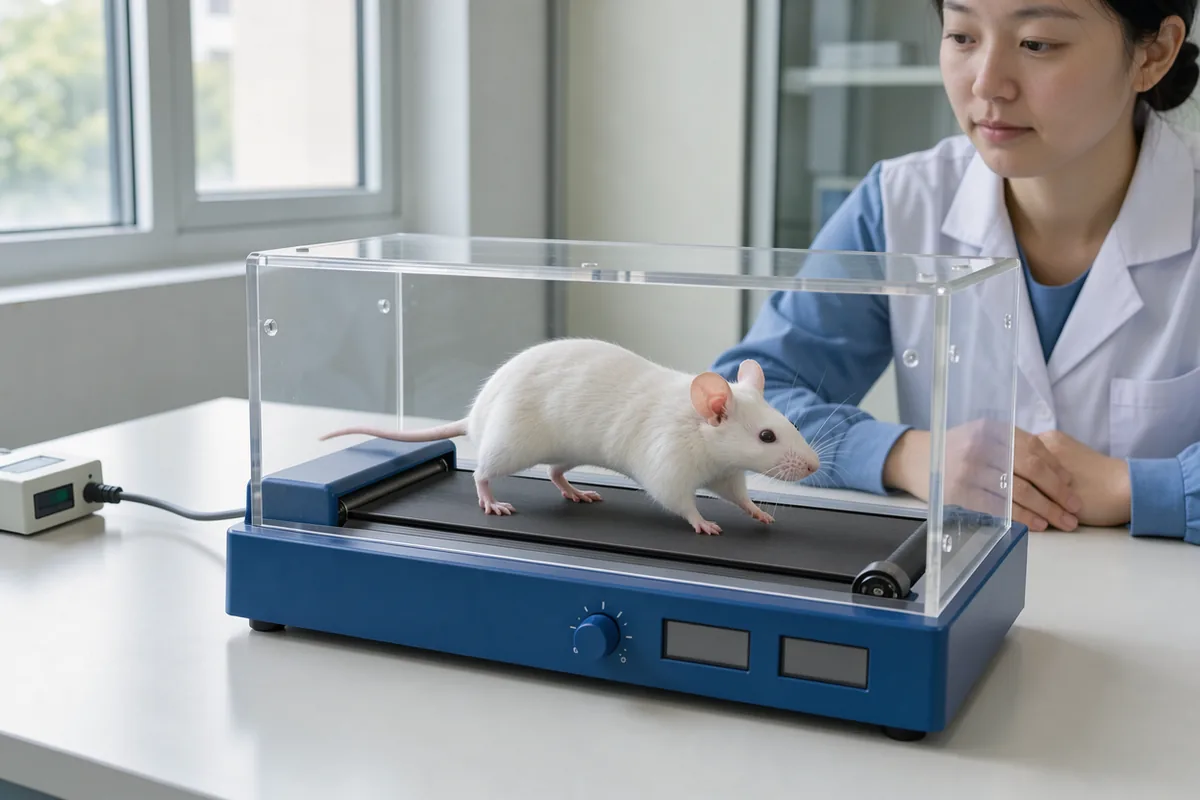
The exercise and physical-capacity paper reports two related observations: exercise induces the body’s own MOTS-c, and administered MOTS-c improved performance in mice. The mouse experiments included young, middle-aged and old animals; the aged animals improved in running capacity, grip strength and gait.
“Exercise mimetic” is the phrase that gives me the most trouble in this literature. It describes a candidate that reproduces some exercise-related adaptations. The familiar shorthand can make an entire exercise session seem replaceable by a molecule. These experiments measured particular mouse outcomes.
The range of physical tests impresses me. A comparison with everyday human exercise would require a different study. The eight-week exercise experiment in diabetic sand rats adds another setting in which exercise intensity changed natural MOTS-c and metabolic markers; that experiment administered exercise rather than peptide.
2024: direct binding to CK2
The CK2 study moves from downstream chemistry toward a direct molecular target. MOTS-c bound casein kinase 2 in cell-free assays. CK2 is a protein that regulates other proteins by adding chemical tags. In the mouse experiments, its activity increased in muscle and decreased in fat, alongside findings on muscle glucose uptake and protection against atrophy.
That tissue difference earns its place beside the headline result. I cannot turn “activates CK2” into a body-wide summary when the same paper reports suppression in fat. The consequences of the fat-cell change remain unresolved.
Direct binding gives the mechanism a tangible point of contact. Repetition by other teams is still needed for some mechanistic effects, a limitation discussed in the broader MOTS-c review. A more precise target improves the research question without supplying the missing human safety and efficacy results.
Lung and cartilage experiments
The later inventory expands into very different injuries. A rodent cardiopulmonary-bypass model found reduced lung injury alongside increased glycolysis, the use of glucose for fuel. Separate cell-culture and rodent osteoarthritis models reported reduced mitochondrial dysfunction, inflammatory cell death and cartilage degradation through an NRF2-dependent mechanism.
I reserve judgement on how much these models share beyond stress-responsive metabolism. Their variety makes MOTS-c biologically intriguing, while their different tissues and experimental injuries make a single clinical conclusion premature. The cardiometabolic page follows the heart experiments and human blood observations in more detail.