Metabolic collection
MOTS-c type 2 diabetes and heart research
Muscle, fat and heart tissue tell different parts of the metabolic story. The human blood studies add a complication that deserves its own page.
Insulin response and muscle glucose
The MOTS-c peptide’s metabolic reputation begins with better insulin sensitivity in mice. Insulin helps cells take up glucose; sensitivity describes how readily they respond. Skeletal muscle was a primary target in the founding work, and cultured muscle cells took up more glucose.
The CK2 experiments give that finding a more specific molecular setting. In mice, muscle CK2 activity rose after MOTS-c, whereas activity in fat fell. The tissue contrast discourages the idea of a single metabolic switch that always moves in a beneficial direction.
The muscle evidence seems strongest to me where a measured finding and its proposed mechanism can be examined together. There is still no completed treatment trial in these sources showing that MOTS-c improves type 2 diabetes in people.
The 2025 diabetic rat heart study
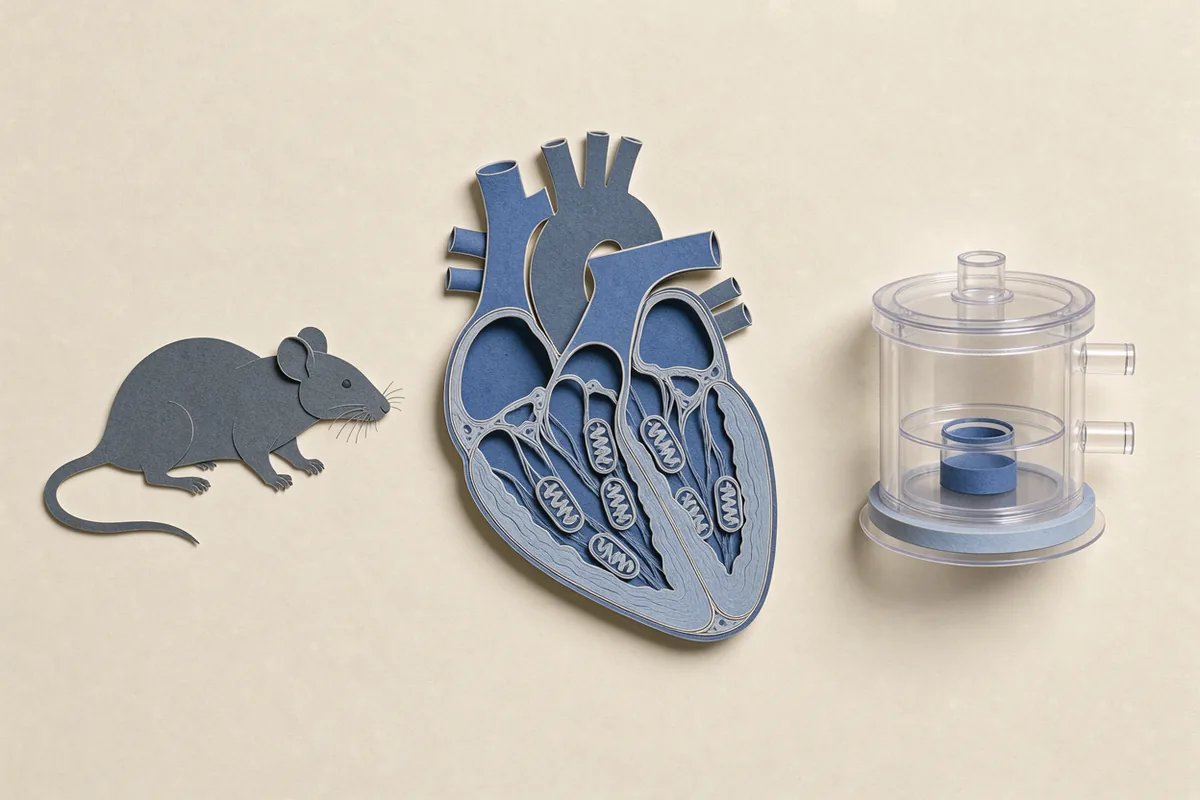
Researchers produced a type 2 diabetes model in rats using a high-fat diet and a drug, then examined mitochondrial respiration in the heart after MOTS-c treatment. Respiration here concerns the mitochondria’s oxygen-linked energy production. It improved alongside lower fasting glucose and reduced thickening of the left ventricle, the heart’s main pumping chamber.
The heart result adds something more specific than another whole-body glucose observation. It asks how a metabolically stressed organ makes its energy. I await a repeat of the rat-heart experiment with more interest than another new disease model.
These findings came from rats and their cardiac mitochondria. Human treatment outcomes for heart disease remain absent from the cited record.
Children and the dialysis cohort
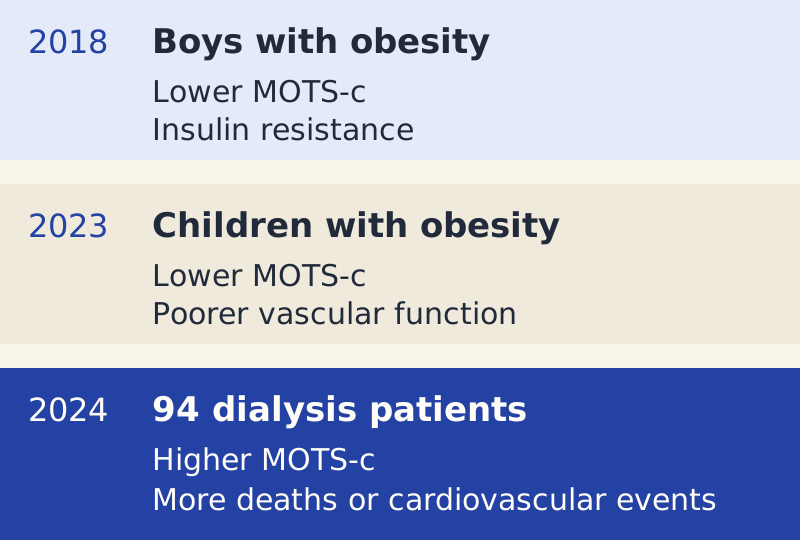
The human entries concern natural MOTS-c levels. In boys with obesity, lower levels accompanied insulin resistance. In another study, children with obesity had lower serum MOTS-c associated with poorer vascular endothelial function, meaning how well the blood-vessel lining helps vessels respond.
Then comes the 2024 cohort of 94 chronic hemodialysis patients. Higher MOTS-c accompanied a composite outcome of death from any cause or non-fatal cardiovascular events. The additional blood measurement did not improve clinical risk prediction enough to guide care.
I expected the pediatric findings to fit a simple deficiency story. The dialysis cohort disrupted that expectation. Different illnesses and populations can yield different associations; the data do not establish whether changing the concentration would change health. Nobody in these studies received MOTS-c treatment.
MOTS-c weight loss and fat metabolism
The original high-fat-diet mouse study found less weight gain after MOTS-c. The ovary-removal mouse experiments examined metabolic dysfunction after estrogen deficiency and reported effects on fat-tissue homeostasis. The existing literature also describes increased heat production by mouse fat tissue.
Those experiments address particular animal models. Human fat-loss or weight-gain outcomes after MOTS-c administration have not been established. I object to how much experimental detail disappears inside “fat burning”: diet, hormonal setting and tissue all mattered to the question being asked.
Exercise in diabetic sand rats
An eight-week study in male diabetic sand rats compared high- and moderate-intensity interval exercise. Exercise intensity changed natural MOTS-c and markers related to glucose and fat metabolism.
This belongs beside the metabolic experiments because it examines the peptide the animals already make. It supplies another reason to investigate exercise-linked MOTS-c biology. For the amounts administered in the separate peptide experiments, the dosage page preserves the animal context.